Gallery Wall Templates: Test Your Layout With Paper First
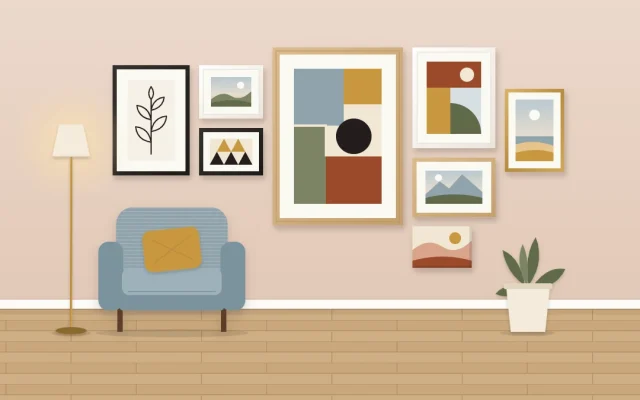
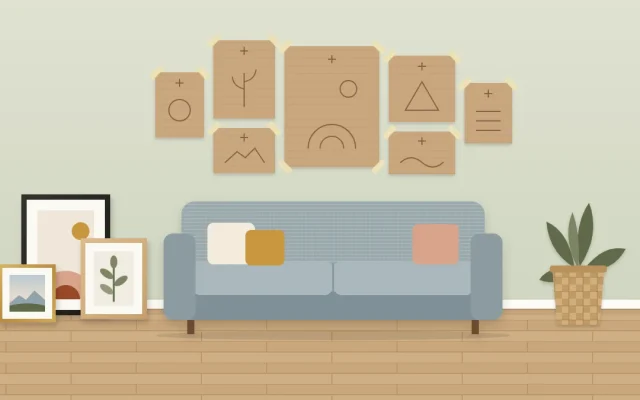
Trace your frames on paper, mark each hanging point and tape the cutouts to the wall. This step-by-step method lets you see and adjust the whole arrangement before making any holes.
All gallery wall guides in one place, newest first: planning and first steps, layouts and spacing, frames, photo walls, art walls, small walls, styling and seasonal updates.
30 guides
Trace your frames on paper, mark each hanging point and tape the cutouts to the wall. This step-by-step method lets you see and adjust the whole arrangement before making any holes.
Compare seven gallery wall layouts at a glance, from grids and rows to loose clusters, ledges and stair walls, with the mood each one gives, the frames it suits and how forgiving it is.
A seven-step sequence for planning a gallery wall: measure, set an outer boundary, edit your pieces, arrange them on the floor, compare versions, transfer with paper and hang from the center.
Never arranged a group of pictures before? Start here: how to choose the wall, gather a handful of pieces, pick one unifying thread and test the arrangement before making a single hole.
Five levels of refresh for an existing gallery wall, from swapping art and mats to re-spacing the group and adding new frames at the edges with paper templates.
Set up a gallery wall with fixed pieces and two or three swap frames, then change the art for spring, summer, fall and winter without rehanging anything.
Five honest ways to build a gallery wall with few or no wall fixings, compared side by side: leaning frames, a picture ledge, a hanging rail, adhesive strips and boards.
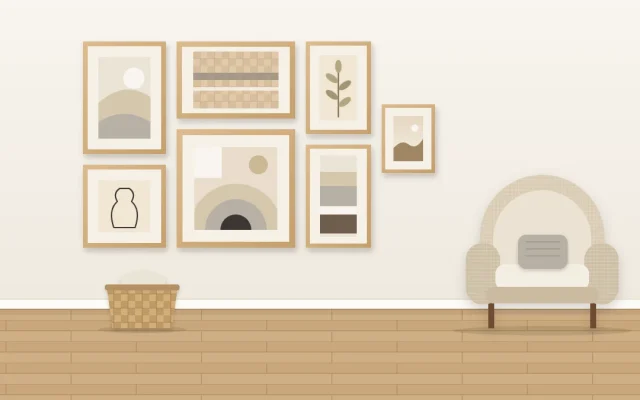
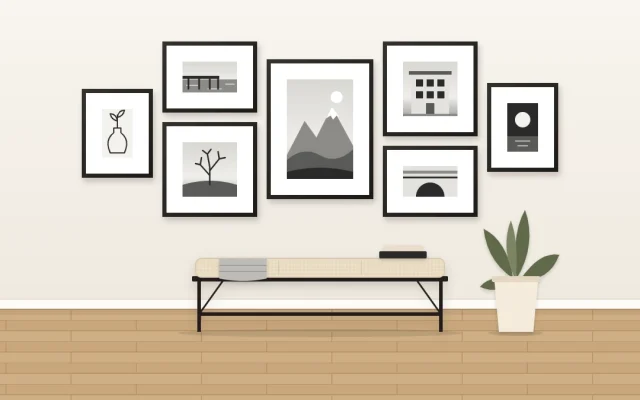
Why a neutral gallery wall can look bland, and five fixes that rely on tonal range, texture, compatible whites, frame materials and varied scale.
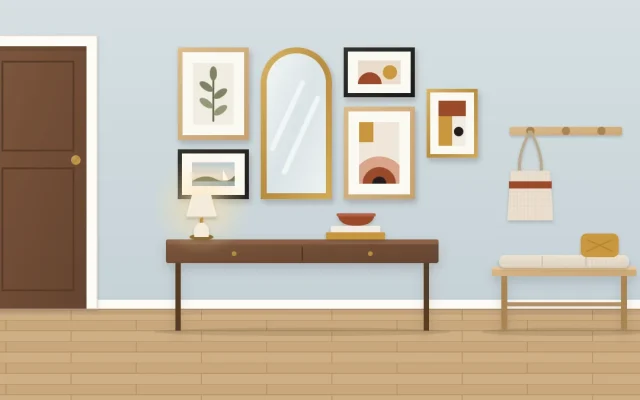
A practical sequence for an entryway gallery wall: map the door swing and coat zone, anchor the group with a mirror, then add sturdy frames and a small ledge.
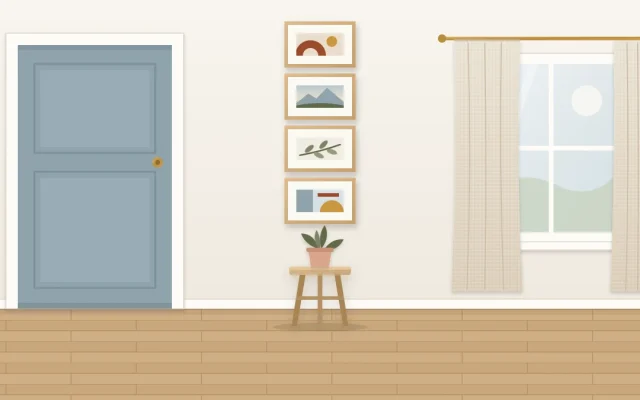
Eight layout ideas for a hallway gallery wall, from a single row on one center line to a matching-frame band, with notes on slim frames, glare and light.
Five compact arrangements of three to five frames for narrow strips, short walls and tight corners, with tips on frame scale, gaps and margins so a small wall looks composed instead of crowded.
Six ways a bright wall goes wrong and how to fix each one: set a palette of three or four hues, vary the intensity, quiet the frames, spread the boldest pieces and tie one color to the room.
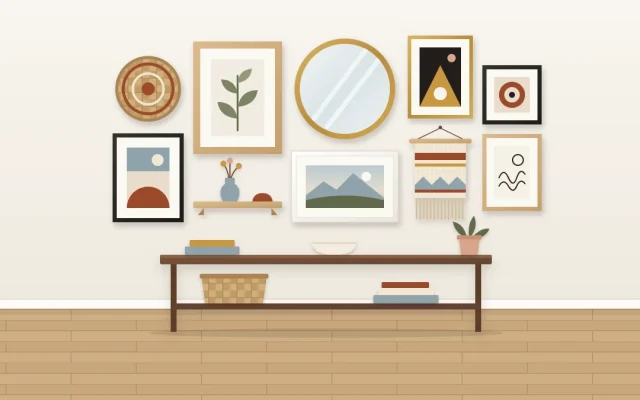
Seven things that sit well among framed pictures, from a round mirror to a small textile hanging, and the habits that keep a wall of frames and objects looking composed instead of cluttered.
How to curate prints, drawings and small originals into one group: pick a single thread, mix scales and media, find art you are free to use, and frame modest pieces so they hold their place.
A step-by-step way to make pictures climb evenly beside the stairs: set one line parallel to the slope, choose a stepped row or a rising cluster, test it in paper and hang from the middle outward.
How to build a monochrome display that looks crisp instead of cold: choosing pictures with a full range of tones, picking frames and mats, matching the grays and warming up the setting.