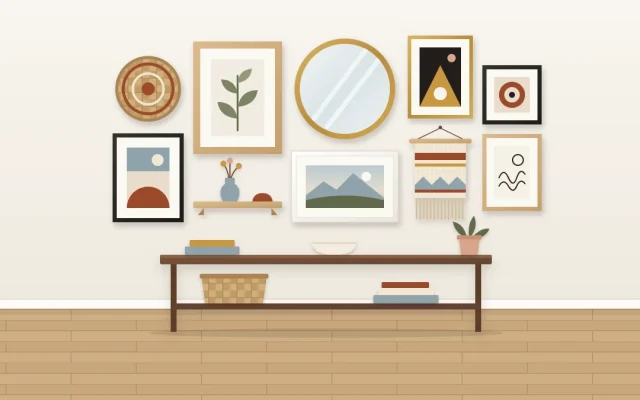
Art Gallery Wall at Home: Choosing Pieces That Belong Together
How to curate prints, drawings and small originals into one group: pick a single thread, mix scales and media, find art you are free to use, and frame modest pieces so they hold their place.
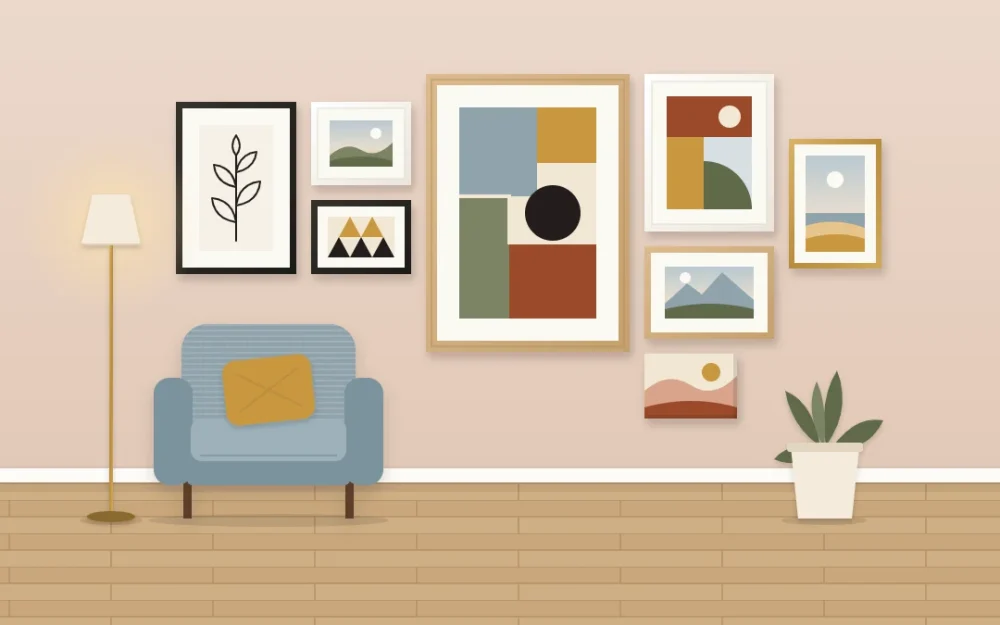
The hard part of an art gallery wall is rarely the arranging. It is standing in front of a pile of prints, a small painting, a drawing and a postcard-sized etching and wondering whether they have anything to say to each other. Buying a matched set would settle the question, and it would also produce a wall that looks bought in one afternoon.
The alternative is to curate: choose one thread that runs through the group, then let everything else vary. The pieces do not need to match. They need one reason to be in the same room.
Curating is not matching
A matched wall repeats the same thing: one palette, one subject, one size, one frame. A curated wall repeats only one of those and lets the others move. That single repeated quality is what the eye picks up first, and it is enough to hold very different pieces together.
It also means the wall can keep growing. A new piece only has to share the thread, not copy what is already there.
Pick one thread and commit to it
Four threads cover most collections. Choose the one your existing pieces already lean toward.
A color family
Every piece contains some version of the same two or three colors, perhaps rust, cream and a deep blue. Subjects and media can be anything. If strong color is the whole point for you, the guide to building a bold palette that still looks deliberate goes further into how to repeat and spread hues.
A subject
Botanicals, landscapes, birds, buildings, faces, the sea. A subject thread is the most forgiving, because it tolerates almost any mix of color and technique. A pencil study of a leaf and a loud abstract painting of a garden clearly belong together.
A medium
All works on paper, all ink, all printmaking, all small oils. The shared surface and mark-making tie the group together even when subjects wander.
A mood
Quiet and pale, dark and dramatic, playful and graphic. Mood is the loosest thread and the hardest to judge, so test it honestly: put the candidate pieces side by side and remove any that change the temperature of the group.
Tip
Say the thread out loud in one short phrase, such as “landscapes in muted greens”. If a piece needs a long explanation to fit the phrase, it belongs on another wall.
Mix the scales
A group of pieces that are all the same size reads as a set, whatever is inside the frames. Varying the scale is what makes a wall look gathered over time. A useful mix for a wall of eight to ten pieces:
- One or two large pieces that carry the wall from across the room.
- Four or five medium pieces that do most of the work of the thread.
- Two or three small pieces that reward a closer look.
The largest piece usually becomes the anchor the others are arranged around. How to choose it and where to put it is covered in the guide to picking and placing a focal point.
Mix the media
Different surfaces give a wall depth that a row of identical prints under glass cannot. Try to include at least three of these:
- Prints on paper, matted and glazed.
- A drawing in pencil, ink or charcoal.
- A small painting on canvas or board, framed without glass or left unframed.
- A textile piece, such as a small weaving or a fragment of embroidery in a deep frame.
The unglazed pieces matter more than you might expect. They break up the reflections and add visible texture. If you would like to go beyond art altogether and bring in mirrors or objects, see the article on adding mirrors, objects and textiles to a gallery wall.
Where to find art you are free to use
A wall of art does not depend on a large budget. It depends on pieces that mean something to you and that you have the right to display or reproduce.
- Your own work. Sketches, watercolors, a page from a notebook. Modest pieces often look best.
- Children’s drawings. Chosen carefully and framed properly, they hold their place beside anything.
- Pressed leaves and flowers. Mounted on plain paper, they fit a botanical thread naturally.
- Local makers. Open workshop days, art school shows and craft fairs are good places to buy originals and prints directly from the person who made them.
- Public-domain collections. Many museums and libraries publish old botanical plates, maps and engravings that are free to reuse. Check the stated terms for each image before printing it.
Frame and mat to give modest pieces presence
Framing is where a small or inexpensive piece gains weight on the wall. A postcard-sized drawing in a frame its own size looks like an afterthought. The same drawing in a medium frame with a wide mat looks chosen.
Use the framing to support the thread, not to compete with it. If the art varies a lot, keep the frames to two finishes and the mats to one white. If the art is quiet and similar, the frames can vary more. A small canvas can go without a frame or sit in a slim float frame, which shows its edges and gives the wall a different kind of outline.
Before you hang anything
Framed, glazed and unframed pieces differ a lot in weight. Choose mounting hardware to suit your wall type and each piece’s weight, and follow the hardware manufacturer’s instructions. Ask for help with large pieces if you are unsure.
Buy slowly and leave a gap
The quickest way to weaken a curated wall is to fill the last three spaces with whatever is available that weekend. Start with the five or six pieces you are sure of, arrange them as a compact group, and leave room at one side or along the top for later additions.
A wall that starts slightly small looks intentional. A wall padded out with fillers does not, and the fillers are the pieces you will want to replace first. Keep the thread written down somewhere, and when you come across a piece that fits it, you will know straight away.
Frequently asked questions
Does the art on a gallery wall have to match?
No. It needs one shared quality, such as a color family, a subject, a medium or a mood. When that single thread runs through the whole group, sizes, techniques and frames can differ widely and the wall still looks considered. Matching everything tends to look like a purchased set.
How many pieces of art do I need to start?
Five or six pieces you are sure about are enough for a compact group. Include one larger piece to anchor it and a couple of small ones for interest. Leave open wall at one side or above so you can add later, instead of buying fillers to finish the wall quickly.
Can I mix original art with prints?
Yes, and the mix usually improves the wall. An unglazed painting or a drawing with visible pencil marks adds texture beside smooth prints under glass. Spread the originals through the arrangement so the different surfaces alternate, and let the shared thread, not the technique, decide what goes in.