Living Room Gallery Wall Ideas for the Wall Above the Sofa and Beyond
Ten living room gallery wall ideas sorted by position: above the sofa, around the television, beside a window, around a corner and above a sideboard, with notes on seated viewing and glare.
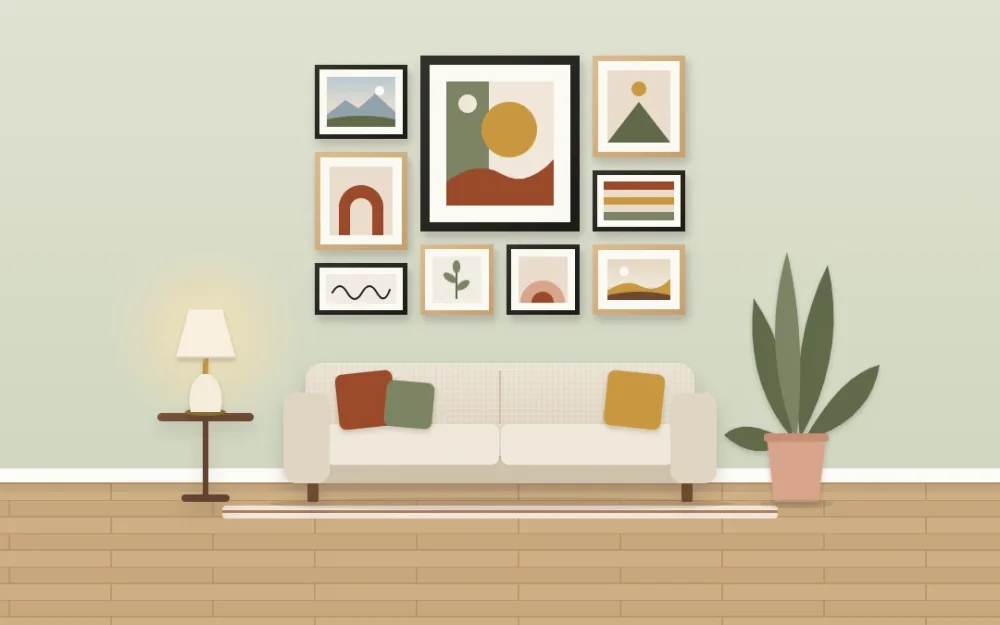
The living room is where pictures get looked at longest, and mostly from a seat. That changes what a living room gallery wall has to do: it needs to read well from across the room, sit comfortably with the sofa, the screen and the lamps, and still reward a closer look when someone stands in front of it.
The ten ideas here are sorted by position, because in this room the spot decides almost everything else. Pick the wall first, then the idea, then the frames.
Before you choose a spot
Sit where you usually sit and look around. The wall you face is the one that rewards detail; the wall behind you is seen mainly by people walking in. Note what stands below each candidate wall, since a sofa, a sideboard or a media unit becomes the base line of the display.
Then decide how formal the result should feel. A mirrored group suits a centered sofa, while a looser one copes better with a room where nothing lines up. The guide to choosing between a symmetrical and an asymmetrical arrangement walks through that decision.
Ideas for the sofa wall
1. A group sized to the sofa
Let the display relate to the sofa instead of the whole wall. A group spanning roughly two-thirds to three-quarters of the sofa width is a common starting point, centered on the sofa even if the sofa is not centered on the wall. For the lowest frames, a hand or two above the sofa back, about 6 to 10 in (15 to 25 cm), is a starting point too. The number that suits your room depends on the height of the sofa back, the frame sizes, the ceiling and whether heads touch the wall when people lean back.
2. One large piece with a supporting cast
Place your biggest piece just off the middle and step smaller frames down around it, so the eye lands in one place and then travels. If you own a standout piece, the article on choosing and placing an anchor piece explains how to build around it.
3. A ledge behind the sofa
A single picture ledge running behind the sofa lets frames lean and overlap, and lets you reshuffle them whenever you like. Keep the leaning pieces modest in size and set them so a cushion or an elbow cannot nudge one forward.
Ideas around the television
4. The screen as one dark rectangle among others
A television alone on a wall dominates it. Surround it with frames and it becomes one dark shape in a larger composition. Include several black or dark frames so the screen has company, leave a slightly wider gap around the screen than between the frames, and choose calm art for the pieces nearest to it so nothing competes with a moving image.
5. A column beside the screen
If a full surround feels like too much, stack three or four pieces in a column on one side of the television, roughly as tall as the screen and media unit together. The column balances the dark rectangle without boxing it in.
Ideas for windows, corners and lamps
6. A stack beside the window
The strip of wall between a window and a corner often stays empty. A vertical group of three there gets soft side light and makes the window look wider. Strong direct sun can fade paper and photographs over time, so keep your most treasured pieces on a shadier wall.
7. A group that turns the corner
Carry one arrangement across two walls behind a corner sofa. Use the same gap on both walls, keep a clear margin on each side of the corner itself, and let one frame finish appear on both sides so the two halves read as a single display.
8. Frames gathered around a floor lamp
Treat a floor lamp as part of the composition. Arrange a small cluster to one side of the shade, leaving the lamp to fill the place where another frame might have gone. With an armchair below, this makes a reading corner that looks planned.
Ideas for sideboards and low walls
9. A cluster above the sideboard
A sideboard gives you a tabletop to work with. Let a vase or a table lamp overlap the lowest frame slightly, so objects and pictures link up. This is a forgiving place for frames in different finishes; the guide to combining different frames shows how to keep that mix looking collected.
10. A low row seen from your seat
On the wall you face from the sofa, try a single row set lower than you would hang it in a hallway. Line up the centers of the frames on one level line, at a height that feels natural to look at from a seat. Small, detailed pieces work well here because you have time to study them.
Tip
A very long wall above a wide sofa needs more than extra small frames. The ideas for filling a big wall without chaos cover scale, outlines and building in stages.
Check the view from your seat
Most hanging advice assumes someone standing. In a living room, test every position sitting down. Have someone hold a frame against the wall while you look from the sofa, then from the doorway, and adjust until both views feel comfortable.
Check glare the same way. Glass reflects lamps and windows, so switch the lamps on in the evening before you settle on final positions. Shifting a lamp a little, tilting a shade, or choosing non-glare glazing for the worst-placed frame usually solves it.
Whichever idea you pick, keep the gaps between frames consistent across the group. That one habit does more than any other to make separate pictures read as one display.
Fixing pieces above seating
Before you hang anything
Anything above the sofa or an armchair needs to be securely fixed, because people sit, lean and stretch beneath it. Choose mounting hardware to suit your wall type and the weight of each frame, and follow the hardware manufacturer’s instructions. For a mirror or a large glazed frame, get help if you are unsure.
Ledges need the same care as frames: fix them for the wall and the load they will carry, as their maker describes. Once everything is up, press gently on each frame. A piece that shifts easily is worth refixing before the room goes back into daily use.
Frequently asked questions
How wide should a gallery wall be above a sofa?
There is no single answer. Many people begin with a group about two-thirds to three-quarters as wide as the sofa and adjust from there. The width that suits you depends on the length of the wall, the sizes of your frames and whether a lamp or plant already fills one end of the sofa.
Can I put a gallery wall around a television?
Yes. Surrounding the screen with frames turns it into one dark rectangle within a bigger composition. Include a few dark frames so the screen has company, keep the nearest art quiet, and leave a little extra space around the screen so vents and cables stay accessible.
Which living room wall is best for a gallery wall?
The wall you face from your usual seat gets the most attention, so it suits detailed pieces. The sofa wall is seen first by anyone entering and suits a bolder group. Check both views, and check for lamp and window reflections on glass before you decide.


